

An operator requests access to remove a finished housing. The cycle indicator goes out, but the spindle is still coasting behind the guard. The machine builder has to decide what the door should do during those few seconds. That decision belongs in the access sequence before anyone chooses a lock.
What the operator is asking for
A request to open the door starts an access sequence. It is useful to describe the sequence from the operator’s point of view. Can the current move finish, or must the cell stop immediately? What confirms that the relevant hazard has ended? What does the operator see while the guard is still locked? The machine risk assessment and control design determine those answers. They can differ between loading, cleaning and maintenance on the same machine.
Ask the controls supplier to name the event that permits release. An ordinary cycle-complete indication can be convenient for production. It may say little about spindle run-down, stored energy or another axis that shares the enclosure. If two machines use the same loading area, include both in the access review. The supplier needs to know what still moves when the operator expects the door to open.
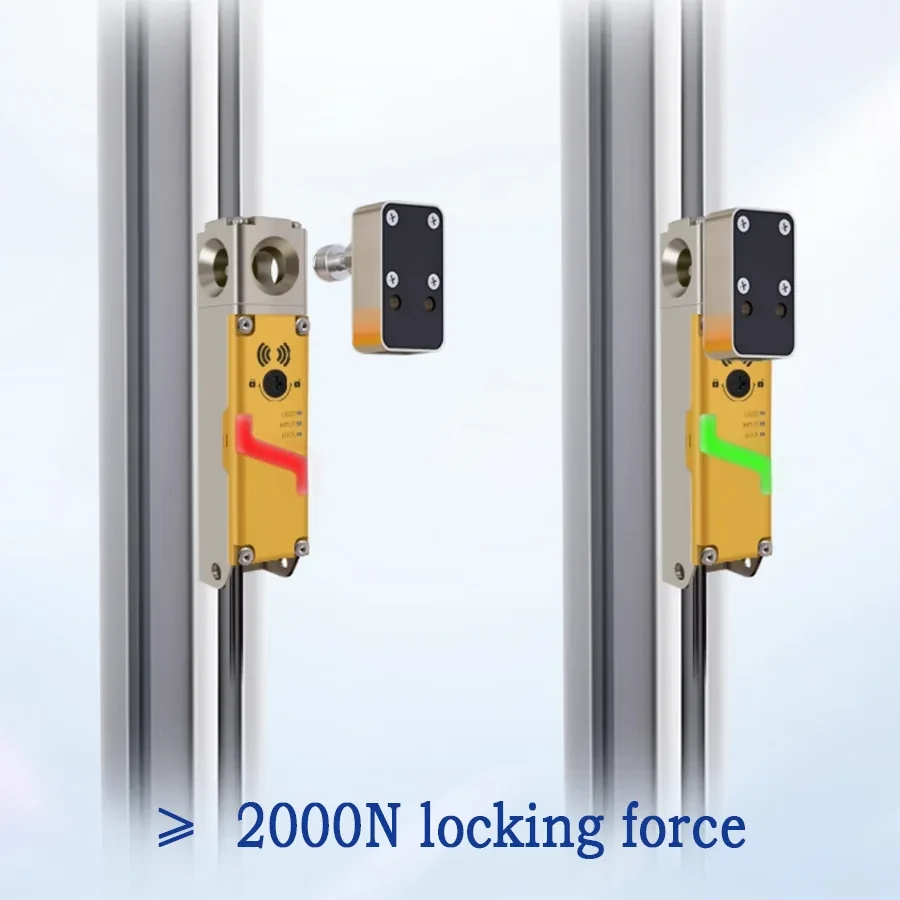
DX-D6 guard-locking switch installed on an access-door frame
How power loss changes the choice
The DX-D6 guard-locking switch product page illustrates why the full order code matters. The manufacturer describes a C version that requires power to release and a D version in which power maintains the lock. These are different responses to a power cut. Bring the likely hazards after a power cut and any access or escape requirements to the machine safety review before choosing between them. Holding force alone cannot settle that decision.
Give the machine builder the access frequency, guard layout and expected behavior when power fails while a person is waiting at the door. Also describe what should happen when power comes back. A release arrangement that fits a routine load cycle may be inappropriate for maintenance or a person inside a larger enclosure. Service work that calls for energy isolation needs its own procedure.
What the next shift needs to see
Walk through a normal unload, a request made mid-cycle and an interrupted power cycle in the validation plan. At each stage, ask what the operator can see and which condition the machine has actually verified. Write down who or what can initiate the next cycle after the door closes. A closed guard and permission to restart are separate states.
The safety door lock selection guide explains the trade-offs between monitoring a guard and holding it closed. Use that comparison when writing the access brief. A useful brief describes how the door behaves while an operator waits, how access is granted and what has to happen before production can resume.
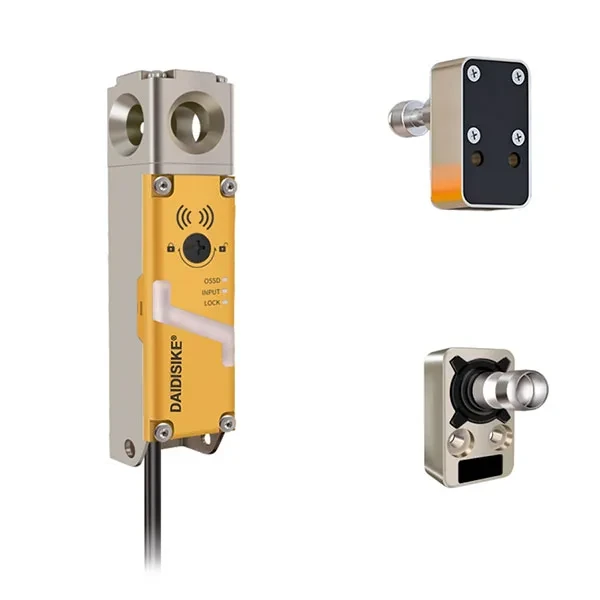
DX-D6 switch with coded actuator and connection hardware

Comments are closed.