Archive

June 2022

Browsing

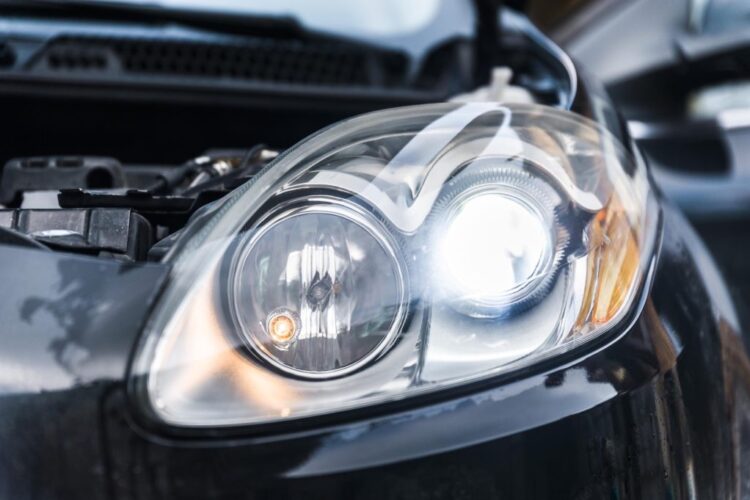
It’s important to know what kind of bulb will work in your automobile before attempting to replace it. With this in mind, our lamp and bulb guide addresses the most pressing issues, such as which bulbs work best for the low beam and which for the licence plate light, in a variety of different makes and models of vehicles. While nighttime accidents are less common overall, they account for a disproportionately greater share of those that end in fatalities. Lights and headlights should always be in good functioning order to reduce the possibility of an accident, especially in low-visibility conditions or at night. So, if you notice a decline in your car’s lighting’s effectiveness, it’s time to get new bulbs.

Halogen

You can get halogen headlights on nearly every vehicle today. To illuminate, halogen bulbs use a tungsten filament enclosed in a glass capsule filled with halogen gas and powered by an electrical current. Since the gas does not easily burn, the filament may be heated and made to light by applying electric current. This is why halogen lamps provide a yellowish glow. Halogen H11 LED bulbs have a single filament with an L-shaped base. 

LEDs

Light-emitting diodes, sometimes known as LEDs, are electronic components that produce light when current is sent through them. LEDs don’t require any warm-up time and produce hardly any heat throughout their operation. They put out the maximum light while using the least amount of energy. They may be quickly and easily attached to an existing headlight. The fact that they may be formed into many configurations and that their beam can extend up to 300 metres are also further advantages. 

Xenon bulbs

High-intensity discharge (HID) bulbs, which include xenon bulbs, use an arc instead of a filament to create light between its two electrodes. The legislation mandates that it reach 80% of its rated capacity within four seconds of being turned on, which necessitates a high-voltage starter to ignite the gas and a control device to keep the bulb burning. Although xenon gas is utilised to initiate the arc, it is metal salts that sustain the flame.

Purchasing your dream car is a significant milestone in your life. Now that you are a proud owner of the dream machine, you should consider buying a comprehensive car insurance policy that can provide insurance coverage for your own damage as well as third-party liability. It also fulfils the statutory requirement of having third-party insurance on your car.

A comprehensive car insurance premium need not have to be costly as you can bring down the premium amount by applying the following tips.

  • Increase Your Voluntary Deductibles

A voluntary deductible is the percentage of the claim amount to be paid by the car owner in the event of any claim. Opting for higher voluntary deductibles lowers your comprehensive car insurance premium as the general insurance firm must incur a lesser claim amount.

You can raise your voluntary deductibles if you are confident in your driving skills or you don’t drive extensively.

Avoid Modifications

Modifying your car can cost you higher own-damage premiums. This is because modifying your vehicle to enhance its looks increases the chance of theft. Also, customising the engine or mechanics to increase acceleration or enhance power increases the risk of accidents.

Thus, you should avoid going for too many modifications. Remember to inform your general insurance firm about such modifications; otherwise, your claim may get rejected later.

Install Authorised Anti-Theft Devices

Installing anti-theft devices certified by the Automotive Research Association of India can reduce theft risk. Therefore, insurance firms provide discounts on own-damage premiums to encourage installing such devices in your car. 

Accumulate No Claim Bonus

No Claim Bonus (NCB) is the discount you can get while renewing your comprehensive vehicle insurance if you haven’t filed any claim in the previous year. You can accumulate NCB every year and get up to a fifty percent NCB discount on your premium after a few years.

Additionally, avoid making small claims to save your NCB. 

Maintain a Clean Driving Record

Clean driving history can impact the vehicle insurance rate. Therefore, you should always aim for a spotless driving record with no accidents, no overspeeding tickets, or even petty traffic rule violations. Apart from getting a better vehicle insurance bargain, maintaining a good driving record also inculcates safe-driving habits.

Never Let Your Policy Lapse

Your vehicle insurance policy lapses if you forget to renew it before its expiry date. The insurance provider might charge you a higher premium if you renew the policy well after its expiry. 

Thus, you should always ensure to renew your policy in time. You can consider buying a long-term car insurance policy of two to three years to stop worrying about policy expiry every year.

Final Word

It is possible to have a comprehensive vehicle insurance policy at a reasonable premium if you know the tips mentioned herein. A few years down the line, you can consider opting for the mandatory third-party insurance cover to further bring down the premium price when your car gets older.

We use transport in our daily life to facilitate movement from one point to another. Without motor vehicles, it is nearly impossible to move from one place to another effectively. This means the automobile industry places a crucial role in facilitating commute.

Over the years, a wide range of vehicles and different types of cars and motor vehicles rolled out from best of bet automobile manufacturers to promote better ways of traveling, from SUVs to the sedan, hatchbacks, vans, and whatnot. The list just goes on and on!

One such vehicle that revolutionized the transport is none other than RVs, also referred to as Recreational Vehicle.

What is an RV? 

A recreational vehicle, often known as RV, is a trailer that constitutes living space for accommodation purposes. RV, sometimes also known as a living van, is equipped with things such as cooking space, beds, bathroom, and washroom facility so that people can live inside the vehicle comfortably.

In other words, a recreational vehicle is a motor van (or a trailer) that literally recreates the living space with a small kitchen or bedroom; you name it.

As you can make out from the description itself, an RV is generally used for living quarters, especially when traveling a long distance. People in many countries, including the United States, choose to take a long drive in RV and use this vehicle to sleep in instead of thinking of it as a hotel room.

The question is, are you an RV owner? If yes, there are a lot of things to keep in mind to protect your RV from external aspects such as the weather and possible damage, etc. This is where the RV covers come into the picture.

RV covers – What are they?

If you ever own a recreational vehicle, you might come across the term “rv cover” at some point in time. So, what does that mean?

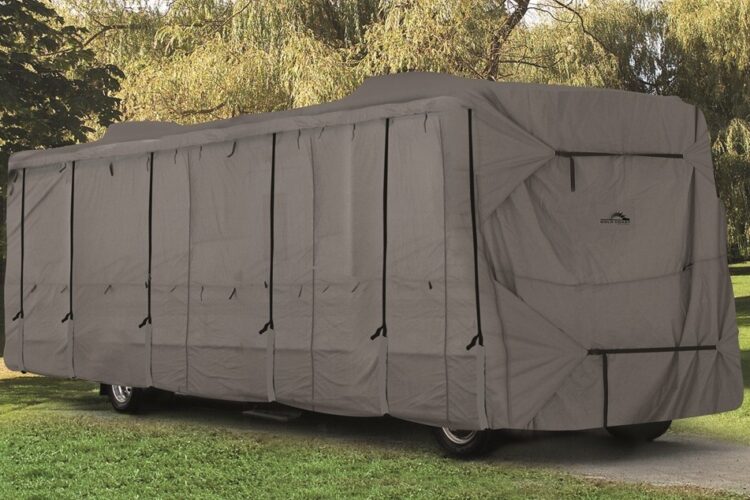
RV cover is nothing but a protective cover similar to a car cover. The primary purpose of RV cover is to protect your recreational vehicle, thus the name! For instance, if you park your RV in an open space where direct sunlight can possibly hit your vehicle and damage the upper coating, RV cover is what you need to tackle this and other similar problems.

Cover manufacturers are coming up with new types of covers that not only helps the RV owner protect the vehicle from damages but also serve multiple purposes at the same time.

After hours of research, we have come up with a comprehensive list of the best types of RV covers in 2022 you should buy for your brand new RV. Take a look!

  • Polyester

Polyester is some of the most common materials used in RV covers, and there is a reason why, mainly because polyester is super cheap and easily found in nature. Making it the best material to be used in an RV cover

Covers made from this material provide excellent protection from UV or ultraviolet rays, making them a suitable option for humid or hot and dry climates. Although, they might not be a good option for protection against water.

Polyester covers do provide some level of protection against water but can’t be treated as a water-resistant cover at all.

  • Polypropylene

The chemical bonding of polypropylene makes it a highly durable as well as reliable material, no doubt. Due to its strong fabric, the polypropylene cover is prone to acid damage, cracking, or tearing. Which also suggests that they are resistant to sharp objects such as blades, etc.

If you live in a cold climate, the polypropylene cover is what we recommend since it can give your recreational vehicle good protection against hard snow and harsh weather or even strong winds at some level.

However, this could not be a good option if you have a budget constraint, which brings us to the next best type of rv cover.

  • Polyethylene

Polyethylene might sound similar to polypropylene, which is true to some extent. But that is just the half-truth.

Similar to the previous type of cover, Polyethylene is strong and resistant to tear. The key difference is the high-density non-porous surface that does not allow water through the cover. In other words, it is more water-resistant than the polypropylene cover. Hence, they are the best waterproof rv covers on our today’s list.

This makes the Polyethylene cover a worth-it option for wet climates. But let me tell you that it does allow air flow to pass through, which should not concern you unless you have multi-layer protection.

If your RV is parked prone to wet and rainy conditions, this cover is just what you were looking for.

Final thoughts

These were the top best covers to buy for your RV. Choose the right one depending upon your requirements and the external conditions of the vehicle.